Thursday, April 7, 2011

Interview with Anna Zeigler

Anna Ziegler, author of THE MINOTAUR, took time from her hectic schedule to answer a few of our more pressing questions.
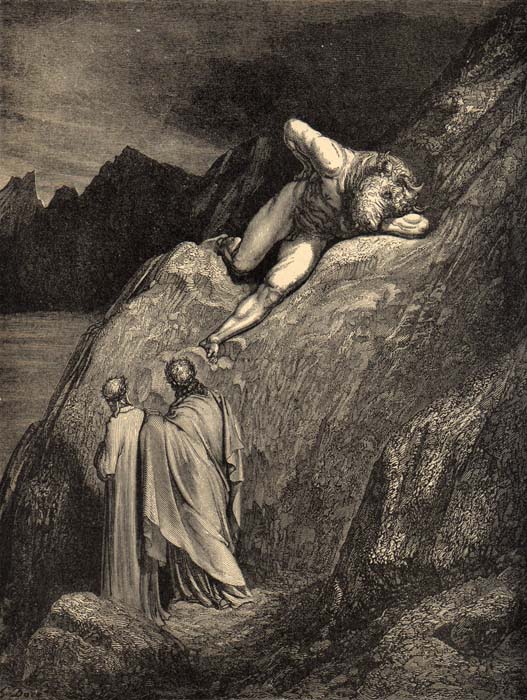

DA: Theater or Film or both, and why?
AZ: Both! I love both theater and film, and can't imagine my life without them. As far as my writing goes, I've done much more playwriting than screenwriting, but I've started to dabble in the latter. (I've been adapting my play Photograph 51 into a screenplay, and just got some support from the Tribeca Film Institute to do so--so we'll see where that goes...)

DA: What got you into theater?
AZ: I grew up in New York City and my parents took me to see a lot of theater. It was mostly musicals, but some plays too (I remember Kevin Spacey's Iceman Cometh quite vividly, maybe because it was so long). I can't say I knew as a kid that I wanted my life to be in theater. But I wrote a lot of poetry and fiction, and even my poetry was narrative and full of dialogue. My senior year in college, I applied to be in a playwriting class taught by Arthur Kopit. To get in, you were supposed to submit a scene, but I didn't have one. Lucky for me, he accepted me on the basis of a poem. He then became instrumental in my continuing on as a playwright. He invited me to be in a writer's group he was starting at the Lark that summer, and also suggested I apply to the MFA program at NYU where he then taught. I did both the writer's group (now known as the Lark Playwrights' Workshop) and the MFA program and got hooked somewhere along the way.

DA: How has your social/ethnic background informed your work?
AZ: Most of my work has at least a passing reference to Judaism, but I don't think of myself as a Jewish writer. I've been drawn to stories that feature Jews -- my play Dov and Ali is about a Jewish teacher and his Muslim student, and my play Photograph 51 is about the Jewish British scientist, Rosalind Franklin. But other plays don't use Judaism as a theme. If anything, my work has been more influenced by the milieu in which I grew up and things that have happened to me along the way.

DA: What was your inspiration for this play?
AZ: I've always wanted to adapt a myth, and it became clear, after seeing Sarah Ruhl's tremendous and inspiring Eurydice at 2nd Stage, that I would have to try right then and there. I'd been looking for the right myth, and a friend of mine, a director named Josh Hecht who was quite familiar with my work, suggested I write about the Minotaur because it tapped into some of the themes to which I was always returning--betrayal and forgiveness and the durability of love. There also seemed to me an unexplored angle to the story-- that the Minotaur was Ariadne's brother, and therefore she was betraying her flesh and blood in helping Theseus. This felt really fresh and interesting to me.

DA: What are you working on right now?
AZ: I'm working on the screenplay referenced above, and also a new play called An Incident, about a New York City family's trials and tribulations when the troubled son disappears on Visiting Day at his camp in Maine.  I also have a show coming up called No Ramon which will be presented in excerpt in New Georges' Germ Project at the 3LD Center this June.
DA: Favorite prime number?
AZ: Eleven, of course.

Thanks again to Anna Ziegler for indulging our curiosity, and be sure to catch THE MINOTAUR at Take Two! May 12th, 2011 at 7PM.  For more info please visit our website at: www.directarts.org/taketwo 

Thursday, March 24, 2011

Remembering the Triangle Shirtwaist Factory Fire


March 25, 2011 is the 100th anniversary of the fire at the Triangle Shirtwaist Factory that cost 129 girls and 17 men their lives and led to widespread labor reforms.  Most of these girls were age 16 to 23 and very recent immigrants to America. I think of my mother, who worked in a sewing factory when I was a child. I think of a hundred ambitious, lively, young girls still wide-eyed with being in a new country full of promise, standing hand-in-hand on the roof, faced with jumping ten stories to their deaths or being burned alive.


For those who are unaware of the infamous story, twenty minutes before the end of the workday on Saturday, March 25, 1911, fire broke out on the 8th floor of the Triangle Shirtwaist Factory where 500 women and 100 men were busy sewing button-up shirts. With combustible cloth hanging everywhere, the fire quickly spread. While many on the 8th floor escaped on one overloaded elevator before the heat made it impossible, the girls on the 9th floor found that the door to the stairwell was locked and there was only one fire escape that quickly buckled beneath them. On the 10th floor, after the workers had climbed to the roof on the one available ladder, they realized they could not get down to safety. The firemen’s ladders were designed for six story buildings and could not reach the upper floors of the new cast-iron building. Thousands of people gathered and helplessly watched in horror as girls began to jump.
Five girls who stood together at a window close to the Greene Street corner, held their places while a fire ladder was worked toward them, but which stopped at its full length two stories lower down.  They leaped together, clinging to each other, with fire streaming back from their hair and dresses.
--The New York Times, March 25, 1911

Owners Max Blanck and Isaac Harris were rabidly anti-union and known as the "shirtwaist kings" of New York. They had locked the door to the stairwell on the 9th floor to prevent girls from stealing and were subsequently charged with manslaughter, but acquitted with the help of a lawyer who insinuated that the survivors who provided testimony were coached by the union. Blanck was fined $20 for locking the doors to yet another factory two years later. But the fire did inspire labor reforms that made the workplace a little less deadly: in 1912, fire drills and automatic sprinklers became law.

Many of the girls who worked in the Triangle Shirtwaist Factory lived in the Lower East Side, still reeling from the General Slocum disaster, which had claimed over 1,000 lives in 1904. To get an idea of the fire's impact on the Lower East Side, take a look at this stunning map created by Remember the Triangle Fire Coalition, who are also behind the Chalk project, in which volunteer artists chalk the names of Triangle Shirtwaist Factory victims on the sidewalk in front of their old residences on March 25. On 11th Street where I lived, I used to go home on the anniversary of the fire, thinking of 14-year old Kate Leone and 18-year old Jennie Pildescu who never came home that fatal Saturday. Here's an eyewitness account from the tragic day and some sad photographs - even the city coroner wept. 

A hundred years later, with the battle over collective bargaining being decided in Wisconsin, it’s more than timely to pause on March 25 to remember that the labor laws we take for granted – the eight-hour day, the 40-hour week, minimum wage, sanitary and safe conditions, unemployment insurance –were rights that were fought for and won at the cost of many lives. The Remember the Triangle Fire Coalition is holding a procession at 11AM at the site of the former Triangle Shirtwaist Factory near Washington Square Park. Barbara Kahn, who writes interesting plays on lesbians in history, has written BIRD ON FIRE, a musical that depicts the fictional lives of two women who worked at the Triangle Shirtwaist Factory. It's at Theater for the New City until April 10th.

Saturday, February 12, 2011

Play it on the G-String

Herewith, Victoria Linchong outs herself as a teenage runaway, former stripper, high school drop out and generally the girl you don't bring home to Mother in an artistic statement on THE GRIND, a multimedia live episodic series, which we hope to develop over the summer for a production in 2011-2012.

Come check out the "pilot episode" of THE GRIND, following JP Chan's DRY CLEAN ONLY at Take Two on Tuesday, February 15th and stay for a discussion in which Victoria swaps stories with sex activist Siobhan Brooks-King, who's got a few tales of her own from her days at Lusty Lady in San Francisco. See the website  for more information!


THE GRIND is set at Bump 'n Grind, a strip club based on Baby Doll Lounge. 
Image courtesy of In the Cut and Jeremiah's Vanishing New York. 


STRIPPING FOR TIPPING

By Victoria Linchong

In 1992, as a teenage runaway one step from the street, my best friend, a dancer new to New York City from Atlanta, took me to the Pussycat Lounge and introduced me to an amazing new way of paying my rent. I earned $80 that night dancing in my underwear - twice as much as what I made all week working as an usher in an East Village theater. For the next eight years, stripping was a means of self-reliance, the bankroll I could count on while I pursued my art.

In my circle of artsy friends, my story is not that unusual. It's almost a rite of passage for any ambitious girl of limited means. Yet, it's a story that's rarely told, mostly since it's hard enough to be respected as a woman and once you've outed yourself as a stripper, your credibility is basically shot. When one thinks of a stripper, one rarely imagines a low-income woman struggling to get by. As a stripper, you are either a victim or a slut, deprived or depraved. The focus on "sex work" centers on "sex" instead of "work," and while the double edge of sexuality is a rich issue to mine, in the context of "sex work" it fails to confront the real questions, which have nothing to do with morality, which are completely socioeconomic: Why are the options are so limited for women? What are the economic realities that make stripping a viable (and even, dare I say it, intelligent) choice for many girls?

In THE GRIND, six vastly different women attempt to find a means to a better end by dancing at a seedy downtown strip club. Although the play will be partially devised, the conversations and scenarios will be based on ones I remember and the characters are based on the girls I danced with - most of them artists, single moms and college students. It's a world that has largely vanished, purged by Giuliani's quality of life campaign, which for better or for worse, eradicated all the neighborhood topless bars, allowing only corporate homogenized stripper emporiums to survive. Set in 1997, THE GRIND serves up the difference between the New York you miss or the New York you missed, through the story of six girls navigating a transformative year, both in their lives and in the life of the city.

Thursday, January 27, 2011

Preview Q & A with J.P. Chan!

J.P. Chan, writer and director of DRY CLEAN ONLY, was kind of enough to be the first participant in what we hope will be a regular feature wherein we get to better know the playwrights and filmmakers involved in this season's Take Two! 

Kavi Ladnier, Debargo Sanyal, and Aaron Yoo in DRY CLEAN ONLY

 DA :Theater or Film or both, and why? 
JP:Both. I like feeling inadequate at a variety of pursuits. I'm going to try app development next.
 

DA: What got you into film? 
JP: Loved sci-fi as a kid and always wanted to create worlds for the screen. After a few decades of procrastinating, I finally got around to it.
 

DA: How has your social/ethnic background informed your work? 
JP: I fell into the Asian American film and theatre circles here in New York and met a ton of amazingly talented people. I found I could cast and crew up my films without going very far, so I took advantage of the resources available to me. Very few of my stories are specifically Asian in any way, but they feature lots of Asians behind and in front of the camera. It wasn't at all planned, but I'm very proud that all my films were made with very diverse teams.

DA: What was your inspiration for this film? 

JP: The original cut of this film was actually made as part of a 64 hour film contest. The theme was "AKA," so I tried to explore the idea of secrets. Only after I finished did I realize it was also about fear, which was also the subject of my first short TAKE IT OR LEAVE IT? I followed up DRY CLEAN ONLY with a short called I DON'T SLEEP I DREAM which "completes" this trilogy that explores fear.

DA: What are you working on right now? 

JP: I just finished a sci-fi short that will stream online starting in March at www.futurestates.tv. I'm hoping to shoot a feature later this year and have a reading of a new play.
 

DA: And just to round out J.P. the man, how many baby carrots do you think you could eat in a minute?
JP: Thirty, easy.


Thanks again to J.P. Chan for being such a sport, and be sure to catch DRY CLEAN ONLY at Take Two! February 8th, 2011 at 7PM.  For more info please visit our website at: www.directarts.org/taketwo 

Wednesday, January 5, 2011

New schedule, new season, new year!

A very happy new year to all!  We at Direct Arts are extremely excited to be kicking off our 2011 Take Two season with a very special, all-Japanese program.

It begins with drinks (as does most everything special does) at 7:00PM for a happy (half) hour meet and greet with filmmakers, artists, social activists and you.  Once we are properly tipped, we'll be screening Jeff Sousa's THE HIROSAKI PLAYERS, winner of Best Narrative Short at the Woodstock Film Festival. Next will be a reading of the play JAPANOIR, by noted Villlage Voice theater critic Michael Feingold, and directed by Nancy Robillard.  Following the performance there will be a discussion with preeminent scholar Kyoko Hirano, as she and the evening's artists explore the connection between theater and film in Japan.

This promises to be an evening to remember, so join us at:

The Ballroom of the Ukrainian National Home
140 Second Ave (between 8th & 9th St)
East Village, NYC
7:00-10:00 PM
$10 donation, no one turned away


This, and every second Tuesday of the month, now through June.  For more information, including  the rest of the season's schedule, please visit our website at: www.directarts.org/taketwo

Thanks and glad tidings!

Sunday, December 5, 2010

Take Two holiday brunch

Direct Arts kicked off Take Two 2011 with a fabulous holiday brunch at the Mexican restaurant La Palapa. The Take Two 2011 schedule will be revealed next week. Until then, enjoy this preview of some the people who are involved!

Actor Max Carpenter speaks to Jeremy Hook, producer of BRAND UPON THE BRAIN.

Writer Anna Ziegler (foreground) and her husband Will speak to Direct Arts board member Victor Rodruguez. 

Alice Cox with a quizzical J.P. Chan.

Brunch at La Palapa.

Michael Niederman rocks the pink shirt as Nurit Monacelli speaks to Jo Mei. 

There's a lot going on in this room.

Jeremy Hook holds court. L-R: Minnea Lin, Alice Cox, J.P. Chan (obscured), Jean Chen.

Jeremy Hook and Direct Arts board member Matt Metzgar.

Editor Minnea Lin with filmmaker J.P. Chan.


Anna Ziegler imbibes hibiscus agua fresca as the hubby voices an opinion.
Minnea Lin with Kira Onadera.

An oddly festive shot of Michael Niederman, Nurit Monacelli, Jeremy Hook and Nancy Robillard. Maybe it's the red and green shirt and those lights in the back.

J.P. Chan, Jo Mei, Victoria Linchong and Jean Chen.

Tuesday, November 16, 2010

The Wasserstein Prize Debacle

"We regret to inform you that of the 19 nominated plays, none was deemed sufficiently realized by the selection panel to receive the Prize. As a result, the Wasserstein Prize will not be presented in 2010. While the panel thought that many of the scripts showed promise, they felt that none of the plays were truly outstanding in their current incarnation.”

The storm over the Wasserstein Prize has put the spotlight on women in the arts, a perennially sore subject for most women in the arts like me. It's astounding that Theatre Development Fund, which manages the award, thought that they could write rejection letters baldly telling 19 female writers nominated by theaters around the country that they're just not good enough without some kind of repercussion. But this is really the tip of the iceberg when it comes to the struggle for women to be taken seriously as writers and artists.

That the Wasserstein Prize is given to a female writer under 32 is already contentious. Committing to life as an artist is fraught with difficulty - during an introductory exercise at the Chicago Directors Lab I attended last June, we discovered to our mutual surprise that just about all of us had parents who disapproved of us being in the arts. For men, this might be tough, but throw in a couple of gender-specific obstacles like the wage-gap and baby-making, and the result is that many women find themselves "emerging" as artists later than men. And it's really discouraging to not only have an expiration date stamped on your forehead, but to wake up and realize that it's already come and gone.

Then of course, there's that gender issue. I think I must have had a dozen conversations with female friends of mine who are in theater, film or otherwise in the arts on why there are so few recognized female artists. I've often said to friends that I had a realization once about how women are intrinsically creative in being able to give birth, whereas men can only create through the arts, but there's really more to the gender disparity than this.  A comprehensive NEA demographic report of 919,000 artists in 2005 shows that women make up just under half of all artists nationwide (46 percent), but that looking at specific artist professions, some are male-dominated and some are female-dominated. Quite obviously, dance is female-dominated, while directing and producing is male-dominated. But while the NEA report shows that writing is actually slightly female dominated, with 56% of writers being female, studies consistently show that only about 17% of the total number of new plays produced in America are by women.

Economist Emily Sands employed a very rigorous empirical approach to studying the paucity of produced women playwrights in her 2009 report, Opening the Curtain on Playwright Gender: An Integrated Economic Analysis of Discrimination in American Theater. Sands obtained two 10-page script samples, one with two female protagonists and one with two male protagonists. She made an equal number of copies and assigned a female pen-name to half the scripts and a male pen-name to the other half. She then sent the scripts to 252 theaters, asking for responses to what she presented as a survey on script evaluation. Replies from the Artistic Directors and Literary Managers of 82 of these theaters revealed that, "Scripts bearing female pen-names are deemed by artistic directors to be of lower overall quality and to face poorer economic prospects than otherwise identical scripts bearing male pen-names. In addition, artistic directors believe cast and crew will be less eager to work on a female-written script."

Even more surprisingly, Sands' report reveals that artists and literary managers who are female are more likely to "deem scripts bearing female pen-names to be poorer fits with their theaters, and to face not only worker discrimination, but also customer discrimination." And weirdly, "The severity of the discrimination against female playwrights appears to be more pronounced for women writing about women than for women writing about men."

Learning about this, I'm reminded of the summer I worked at the Coney Island Sideshow, where part of the rotation of the performers was to hawk the show on the bally. We all had about the same spiel, "Step right up, step right up! Ten shows in one! One dollar, one dollar, one dollar, one dollar!" But it never failed that people would only listen if it was a white guy talking. The Latinos and African-Americans who are predominantly on the boardwalk on a hot summer day are immune to other Latinos and African-Americans who want a dollar out of them. And a little Asian girl with a snake only makes the guys stop and reach for that other bulge. But get a white guy up on the bally and the skeptical crowd immediately becomes more receptive. We surmised that the general public must be conditioned by Bob Barker and other white-guy-announcers on TV.

NYSCA's 2002 roundtable on women in theater also made much of unconscious discrimination, with Dr. Virginia Valian, author of Why So Slow? The Advancement of Women, demonstrating that even slightly preferential treatment has long-term repercussions, "In a situation where men and women in equal numbers begin their careers with precisely the same qualifications,and a mere 1% bias is introduced, in time, a top executive level of 35% women and 65% men will be affected." This would explain why there may be an almost equal number of male and female playwrights, but so few female writers are produced. Valian's research concludes that "while most men and women would assume otherwise, when judging quality, they are acting on deep assumptions that are neither equitable nor accurate. Unless men and women become conscious of these assumptions, and make a conscious decision to achieve parity, they will automatically prefer men, even in fields where women predominate."

But besides discrimination, conscious or unconscious, female artists also have the odds stacked against them because of economics. The NEA report reveals that "women artists who work full-year, full-time, earn $0.75 for every dollar made by men artists." And the 2002 NYSCA roundtable eloquently observed, "For good and ill, women tend to operate outside the mainstream. In the absence of opportunities, women are resourceful and create their own, self-producing or starting enterprises outside of the mainstream. However, as many participants testified, burdened with child care, 'day jobs' and lower salaries (75.8%) than those earned by their male counterparts, women's theatre work is often their third shift. Under funded and understaffed, female theatrical entrepreneurs 'burn out' even more rapidly than men in this high-burnout field."

The Wasserstein Prize is $25,000. To be given, even for a year, that kind of financial freedom - to be provided with what Virginia Woolf so eloquently described as a room of one's own - what a dream! I'm not sure what the answer to achieving gender equality in the arts force is, much less in the work force. But it does seem that part of the solution has to do with opportunities. Support for women in the arts will lead to more women in the arts. The production of more plays by women will lead to more artistic directors feeling secure in producing female playwrights. Which is why the Wasserstein Prize is so important. It's unconscionable that the award committee would decide not to give the prize when opportunities for women playwrights are so limited. Especially when it's a prize named after Wendy Wasserstein, who saw her writing as a political act to encourage other female playwrights.

--Victoria